

Molecular data and clinical history in one place
Frameshift integrates internal assays, external reference labs, and Epic records into a single system, helping institutions centralize data for clinical care, trial enrollment, and research.

Handling external data
Institutions often receive genomic data as static PDFs from a variety of external vendors. Frameshift normalizes this data to make it usable:
➜ Creates a unified data format for consistency across different testing platforms.
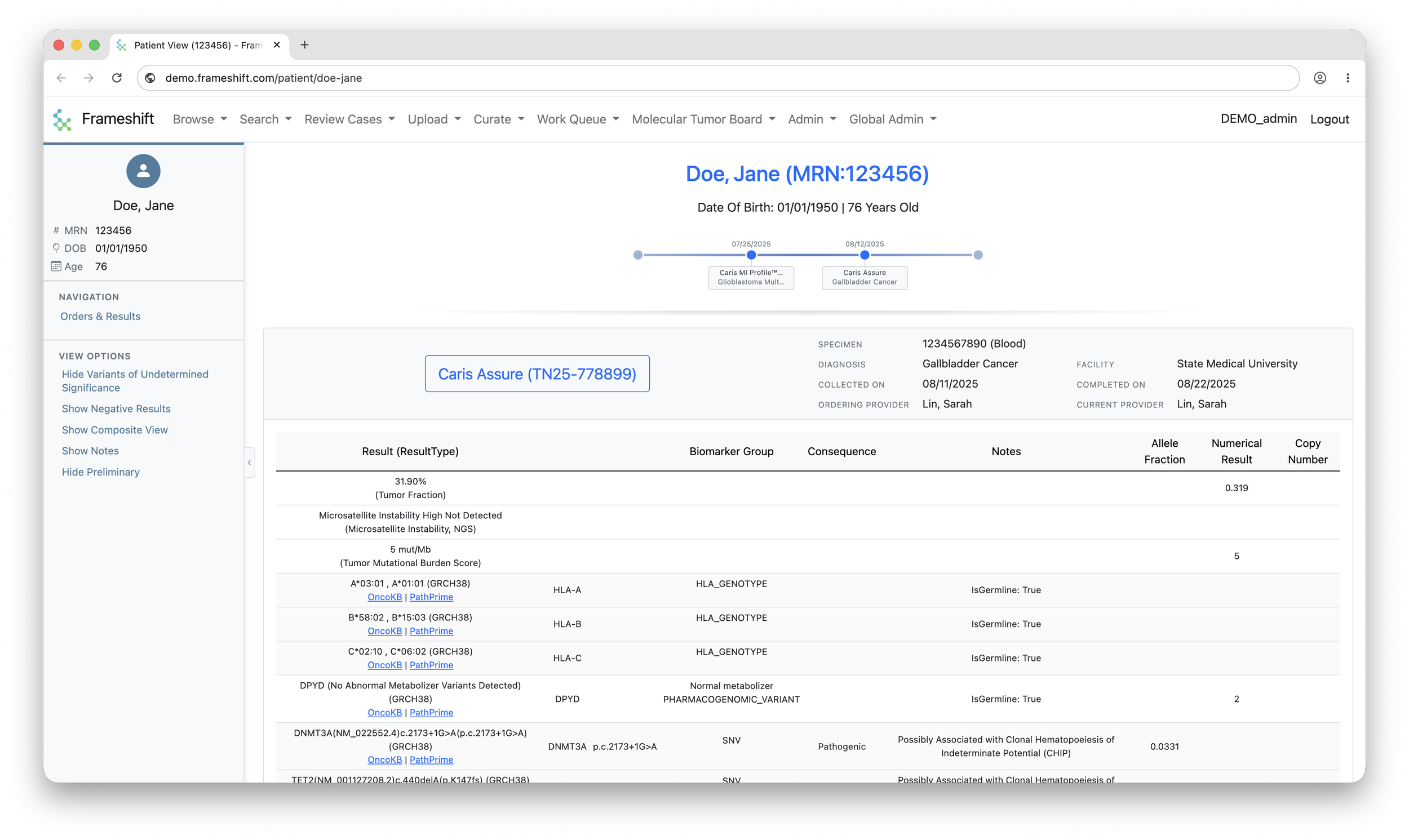
➜ Combines past and current testing profiles into a single timeline for each patient.

Managing internal workflows
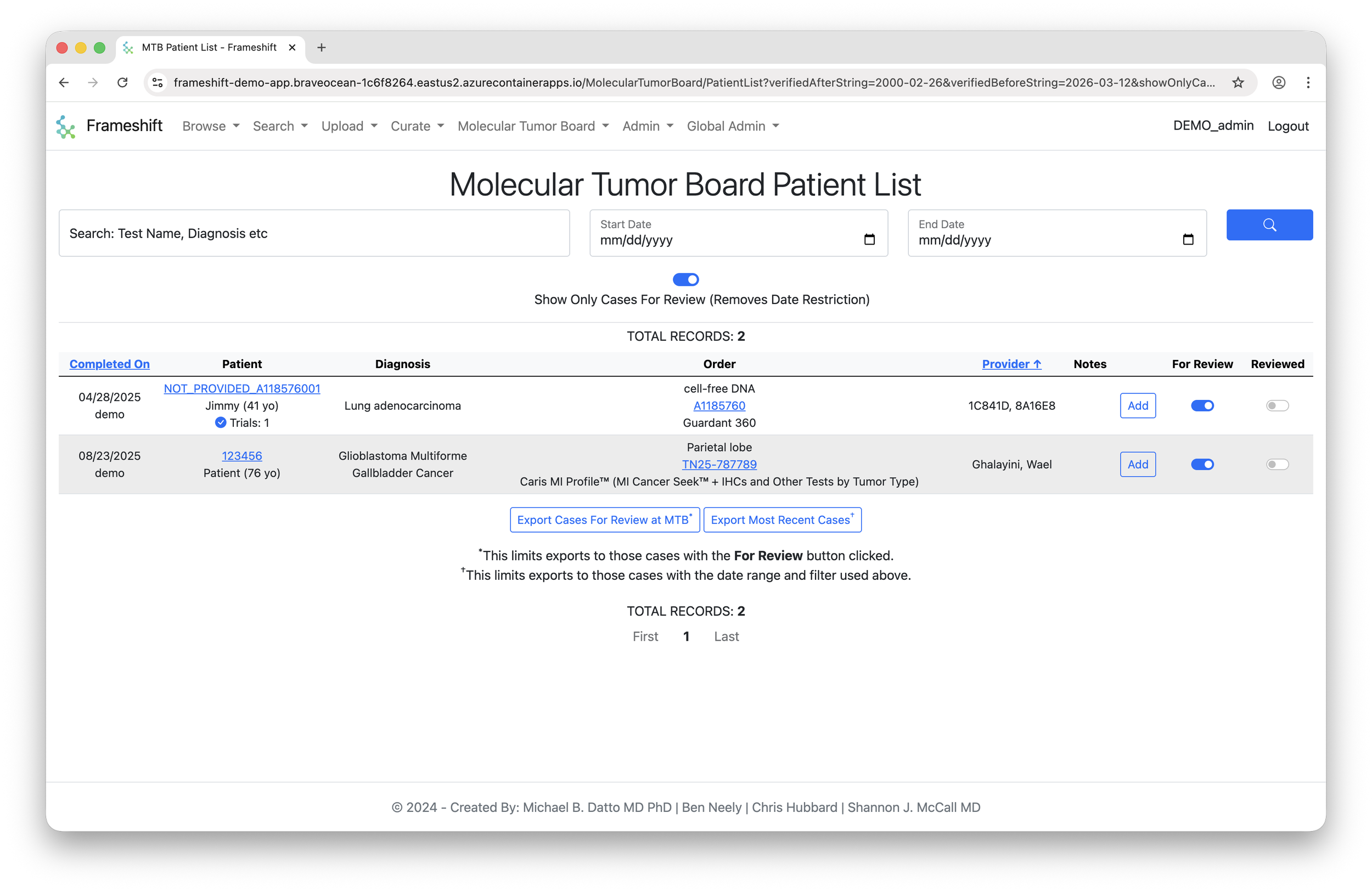
Frameshift gives clinical teams a central place to manage internal assays and review cases together:
➜ Tracks the internal tertiary analysis workflow from raw sequencer data to the final report sign-off.
➜ Provides a shared workspace to curate patient lists, review molecular data, and capture case notes during tumor board meetings.
Integrating clinical data
Frameshift connects directly with Epic via FHIR, bringing a patient’s medical and oncology history alongside their molecular profile:
➜ Pulls longitudinal clinical records directly into the patient view.
➜ Compiles a concise summary of a patient’s diagnosis, prior therapies, and lab history to help clinicians and Molecular Tumor Boards prepare for case reviews.
Utilizing molecular and clinical data
Standardizing genomic and clinical records makes an institution's entire patient history searchable and actionable for clinical care and research:
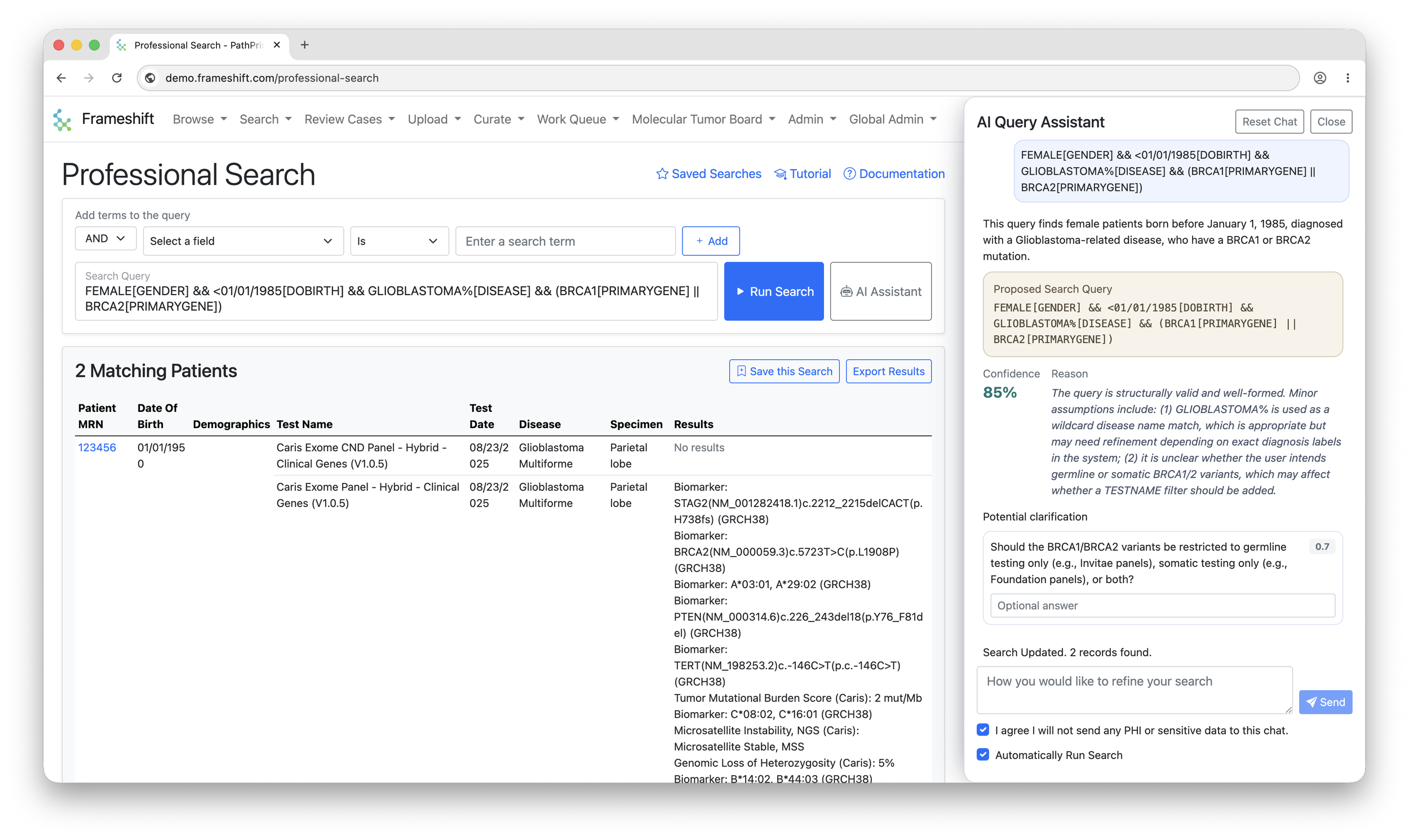
➜ Search across populations in plain language, such as "Find all female patients over age 55 with a KRAS G12C mutation”, to match patients to trials or build research cohorts.
➜ Ask patient-specific questions against a combined clinical and molecular record, such as "Given this patient's molecular findings, what treatment options should be considered based on their prior therapies and response to treatment?"
Enterprise validation
Frameshift was built and validated by the Duke University Health System. High-volume clinical and research teams use the platform to unify fragmented vendor data, manage internal molecular assays, and perform case reviews.