

Centralizing genomic data for clinical care and research
Frameshift normalizes external molecular lab results and manages the internal tertiary analysis workflow, helping institutions centralize data for clinical care, trial enrollment, and research.

Handling external data
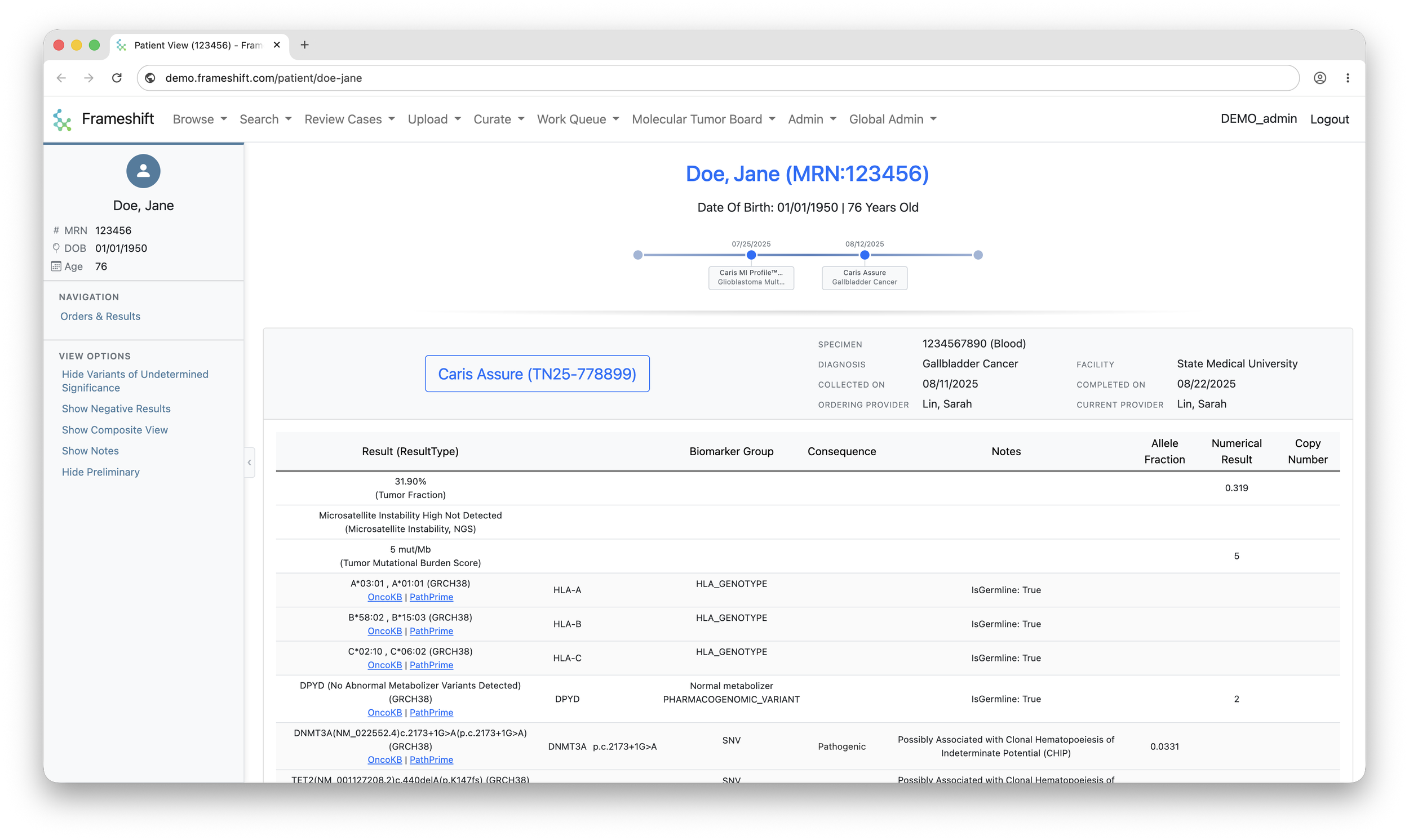
Institutions often receive genomic data as static PDFs from a variety of external vendors. Frameshift normalizes this data to make it usable:
Creates a unified data format for consistency across different testing platforms.
Combines past and current testing profiles into a single timeline for each patient.

Managing internal workflows
Frameshift gives clinical teams a central place to manage internal assays and review cases together:
Tracks the internal tertiary analysis workflow from raw sequencer data to the final report sign-off.
Provides a shared workspace to curate patient lists, review molecular data, and capture case notes during tumor board meetings.
Utilizing molecular data
Standardizing the data makes an institution's entire molecular history searchable for clinical care and research. Frameshift connects this data into a single system and provides the tools to explore it:
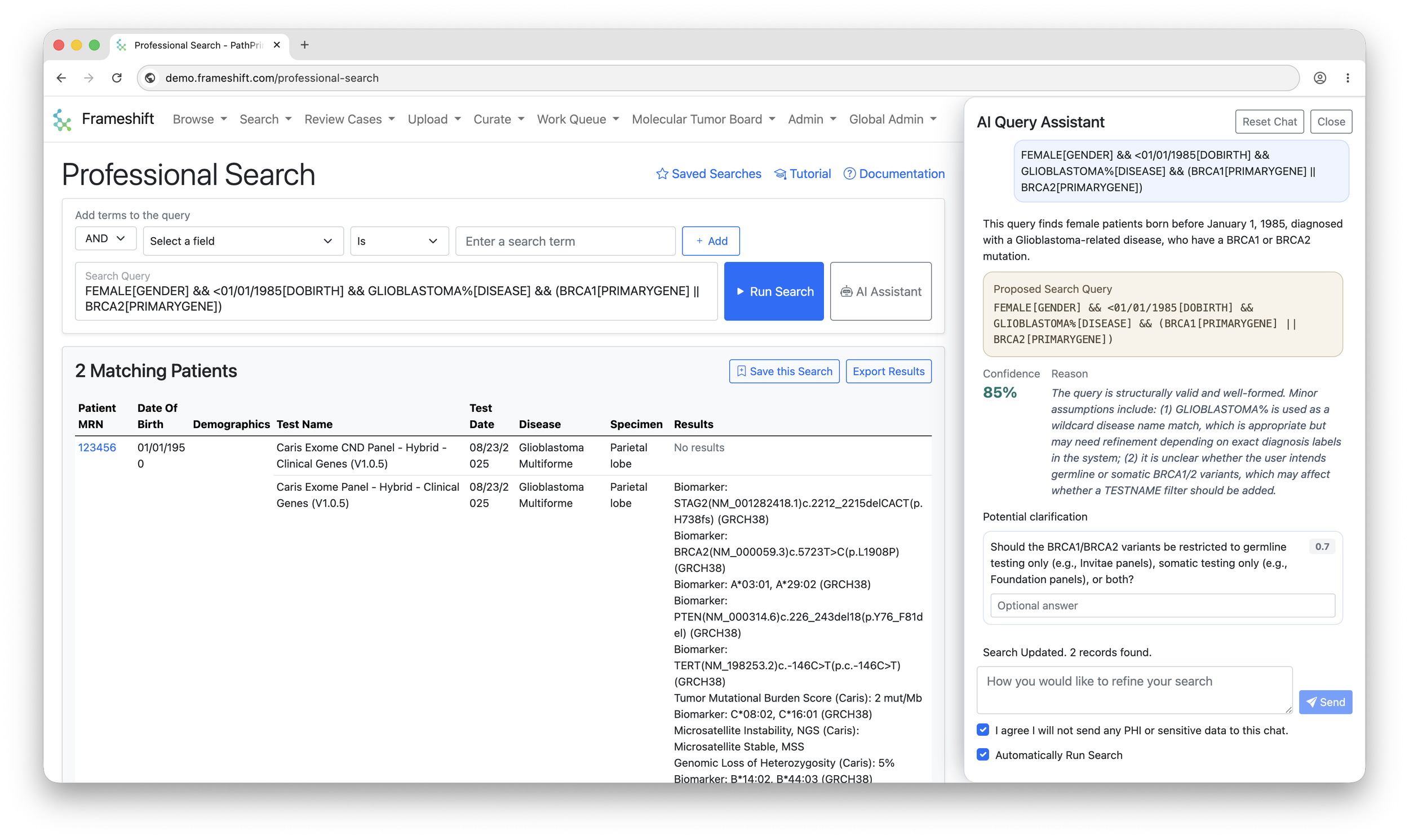
Search by specific mutations, fusion types, or other clinical criteria to match patients to trials, find treatments, or build research cohorts.
Navigate complex datasets using standard search queries or natural language.
Enterprise validation
Frameshift was built and validated by the Duke University Health System. High-volume clinical and research teams use the platform to unify fragmented vendor data, manage internal molecular assays, and perform case reviews.